Building a House with a Terrace? What to Consider for a Future Patio Awning Installation
Planning to install a patio awning in the future? Discover what to consider when building your home, from mounting requirements and facade preparation to electrical connections and effective terrace shading.

Building a House? What to Plan Ahead for a Future Patio Awning Installation
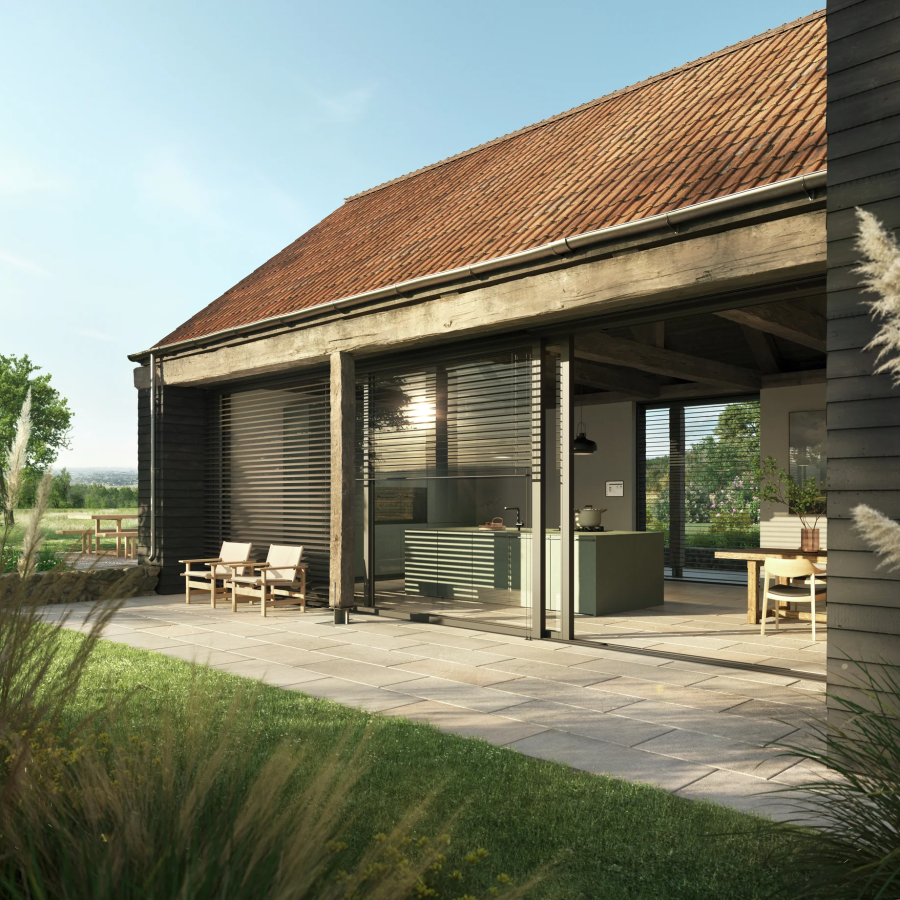
When designing a new home, the terrace is often imagined as a place for relaxed breakfasts, outdoor dining, and spending time with family and friends. While much of the planning focuses on its size, layout, and flooring, sun protection is just as important. After all, having the right amount of shade can make all the difference to how comfortably you can enjoy your terrace on sunny days.
A patio awning offers the flexibility to enjoy shade when you need it and sunshine when you want it. Even if you are not planning to install one immediately, making a few key preparations during construction can make the process much easier later on, helping you avoid unnecessary alterations to your finished home.
Here are five important things to consider when building a house if you would like to install a patio awning in the future.
1. Choose a Suitable Mounting Location for Your Patio Awning
A patio awning needs a secure mounting point that can support not only the weight of the awning itself but also the wind loads and other forces it may experience during use. This makes it important to consider where the awning will be installed and whether the building structure can safely support it.
Ideally, the mounting location and fixing method should be planned in accordance with the technical specifications of the awning system you intend to install.
2. Plan the Awning Fixings Before Finishing the Facade
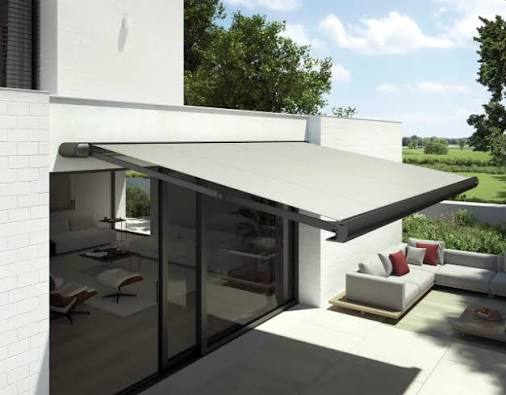
If your home will have an insulated facade, the awning installation needs to be considered carefully. Both the thickness of the insulation and the structure beneath it will influence how the awning can be securely mounted.
Facade render and insulation alone cannot provide the structural support required for a patio awning. The mounting system must transfer the loads to the building's load-bearing structure using fixings suitable for the specific facade construction.
Before the facade insulation is installed, it is worth consulting an awning specialist and your building contractor to determine whether any additional mounting components or structural preparations are needed.
It is also a good idea to photograph and document the prepared mounting points. This will make them much easier to locate once the facade has been completed.
3. Allow Enough Space and Consider the Installation Height
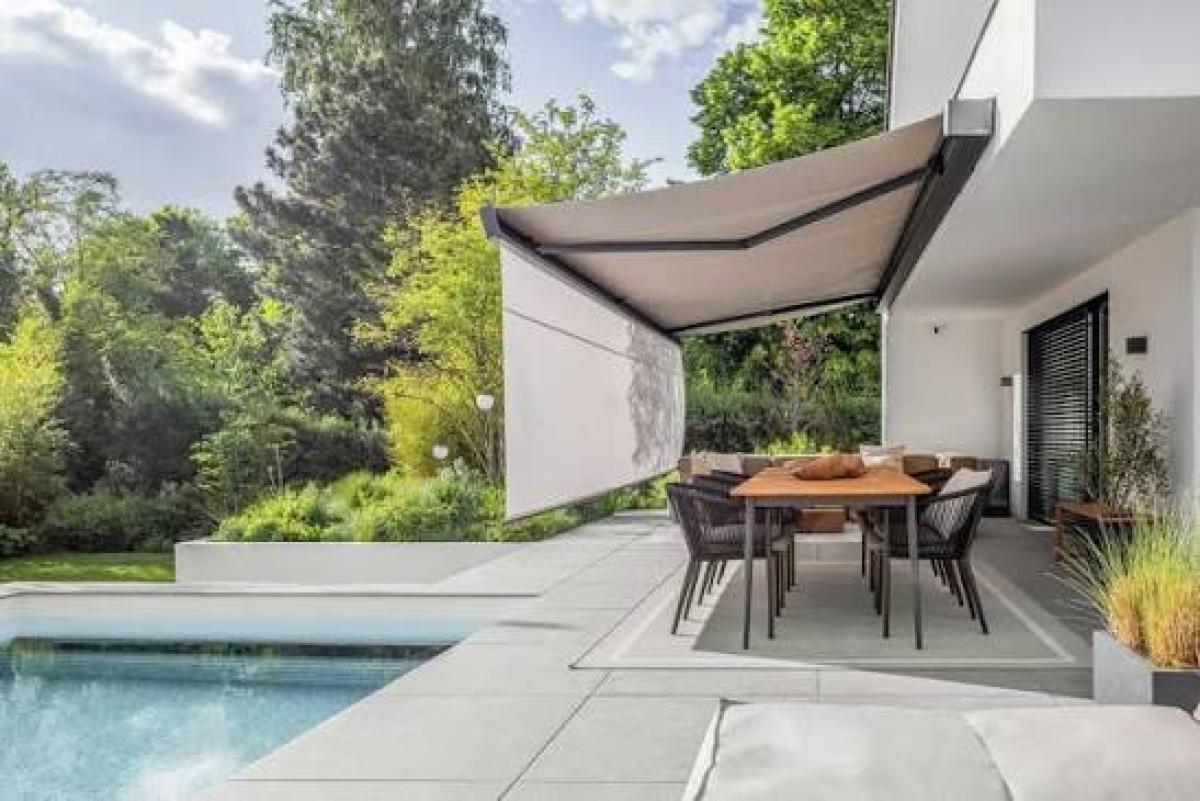
When deciding where to position your awning, it is important to allow sufficient space for the awning housing and mounting brackets, while also ensuring comfortable headroom beneath the awning when fully extended.
Because the awning fabric slopes downwards from the house towards the terrace, its front edge will sit lower than the mounting point on the facade. The steeper the slope, the greater the difference in height.
It is also worth checking the position of roof overhangs, gutters, downpipes, outdoor lighting, and ventilation outlets. These elements can affect where the awning can be installed and may interfere with its operation if they are not considered early enough.
4. Prepare the Electrical Supply for a Motorised Awning
If you are considering a motorised patio awning, planning the electrical connection during construction is a simple step that can save considerable work later. It allows the necessary wiring to be incorporated into the building before the facade is finished, avoiding exposed cables and additional installation work.
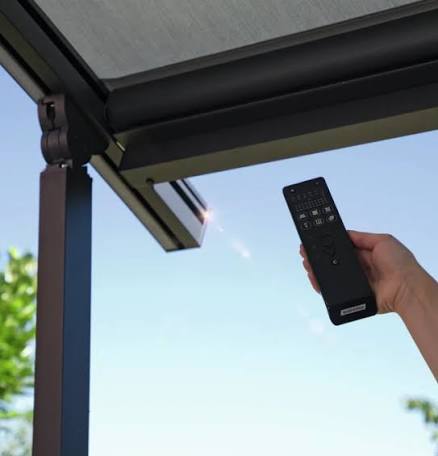
It is also worth thinking about how you would like to control your awning. Depending on the system, options may include a wall switch, remote control, automatic sensors, or integration with your smart home system.
An awning specialist and electrician can help determine the most suitable cable routing, power supply location, and electrical connections based on the requirements of the chosen system.
5. Consider Sun Exposure and Wind Conditions
The amount and position of shade on your terrace will change throughout the day as the sun moves across the sky. This means that choosing the right awning involves more than simply measuring the terrace.
For example, if your terrace receives strong morning or evening sunlight, the low angle of the sun may mean that a standard awning does not provide enough shade. In such cases, additional side shading may be worth considering.
Wind exposure is another important factor. Every patio awning has a specified level of wind resistance, and it must be retracted when wind conditions exceed the manufacturer's recommended limits.
If your terrace is particularly exposed to strong winds, a pergola with vertical support posts may be a more suitable option. Depending on its design and specifications, a pergola can offer greater wind resistance than a traditional retractable awning.
Install Your Awning Later, but Plan for It Today
Installing a patio awning on an existing house is often perfectly possible. However, taking a few practical steps during construction can make the installation much more straightforward in the future.
By planning suitable mounting points, considering the facade structure, and preparing the electrical supply in advance, you can avoid unnecessary work on your finished home.
Most importantly, preparing for an awning does not mean you have to purchase one straight away. It simply gives you greater flexibility and makes it easier to choose the right solution when the time comes.
When Is the Right Time to Contact LuxControl?
The best time to consult an awning specialist is during the initial design stage, when there is still plenty of flexibility to plan the mounting location, structural fixings, and electrical supply.
If your house is already under construction, it is worth arranging a consultation before the facade insulation and finishing work begins.
At LuxControl, our specialists can help you assess your terrace layout, choose suitable awning dimensions, and identify the technical requirements for installation. This allows the necessary preparations to be coordinated with your architect, structural engineer, and building contractor, ensuring your home is ready for a future patio awning.